
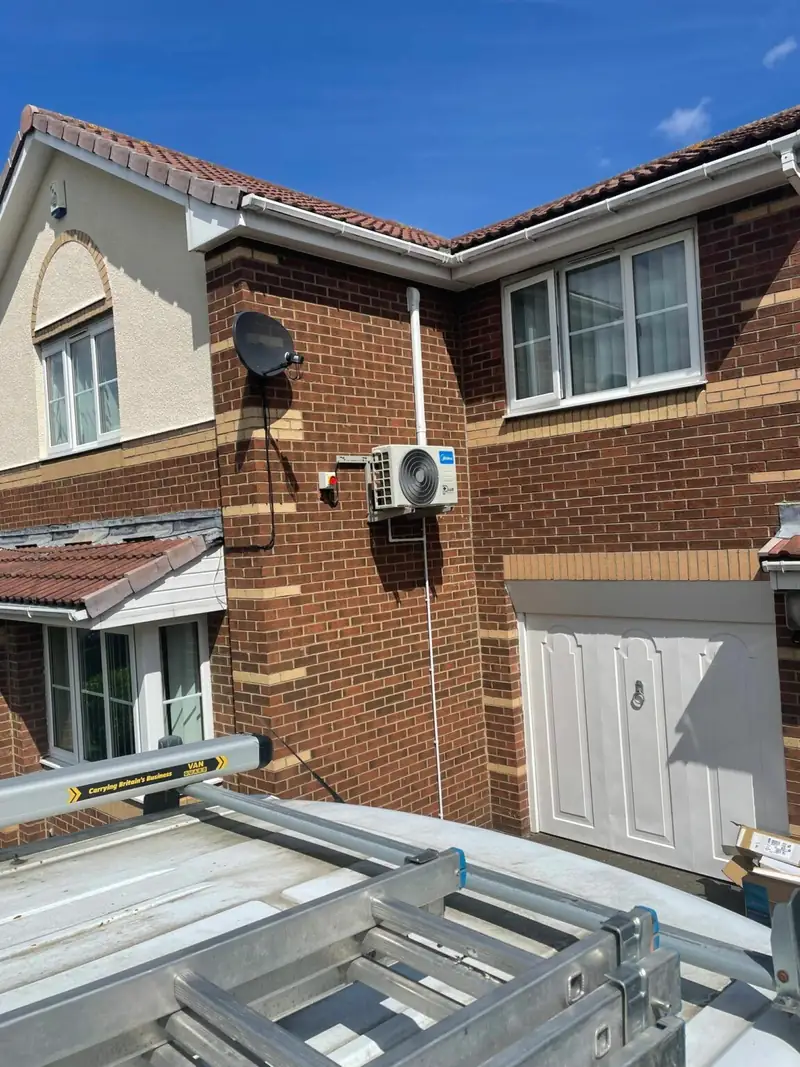
Air Conditioning Installation in Manchester
From a single bedroom to a whole office floor, we survey, size, install and commission air conditioning that’s right for the space, with neat pipework and a clean finish on every job across Greater Manchester.
- Survey
- Free, no obligation
- Typical home install
- Usually one day
- Engineers
- F-Gas certified
Get a free quote
No obligation. We'll get back to you as soon as possible.
A good air conditioning installation is mostly decided before anyone picks up a drill: the right size of system, the right unit positions and a sensible route for the pipework. That’s where we start on every job in Manchester and the surrounding boroughs.
We install systems for homes and businesses, working with trusted manufacturers’ modern, energy-efficient equipment. Most of what we fit are inverter-driven split systems that cool in summer and can also provide efficient heating in winter.
What’s included in an air conditioning installation?
Our installation price covers the whole job, not just hanging a unit on the wall:
- Site survey to measure rooms, check walls and agree unit positions with you
- System selection and sizing based on heat gains rather than guesswork
- Indoor and outdoor unit mounting on brackets, wall frames or a level ground base
- Insulated copper refrigerant pipework, condensate drainage and interconnecting cable, finished in trunking where it’s visible
- Pressure testing and evacuation of the pipework before the refrigerant is released
- Commissioning and handover: performance checks, a run-through of the controls and the paperwork you need for your warranty
Which type of air conditioning system suits your property?
The right system depends on the number of rooms, the space available inside and outside, and how the building is used.
Wall-mounted split systems
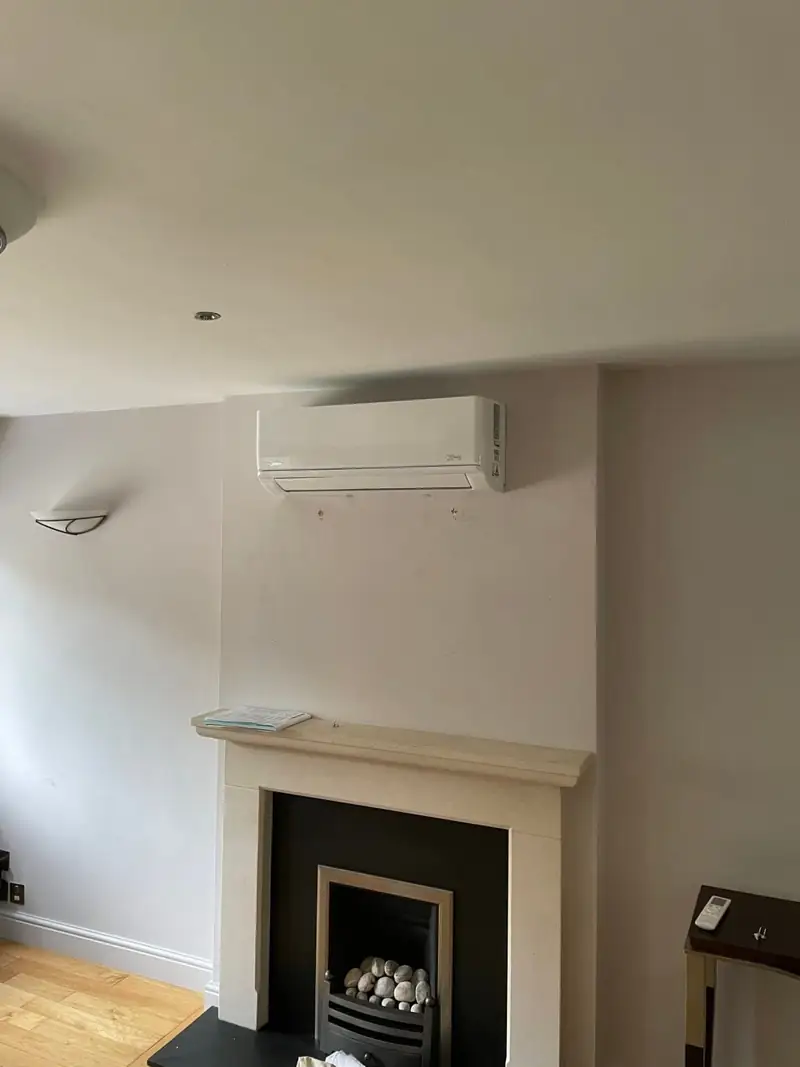
One indoor unit connected to one outdoor unit. Wall-mounted splits are the most popular choice for bedrooms, home offices and single rooms, and the simplest to install and maintain.
Multi-split systems
Two or more indoor units served by a single outdoor unit, so you can cool several rooms without filling the outside of your property with condensers. See our guide to multi-split air conditioning.
Floor-standing console units
Low-level units that sit beneath a window or against a wall. They’re a good fit for conservatories, garden rooms and rooms with sloping ceilings where a high wall isn’t available.
Ceiling cassettes and ducted systems
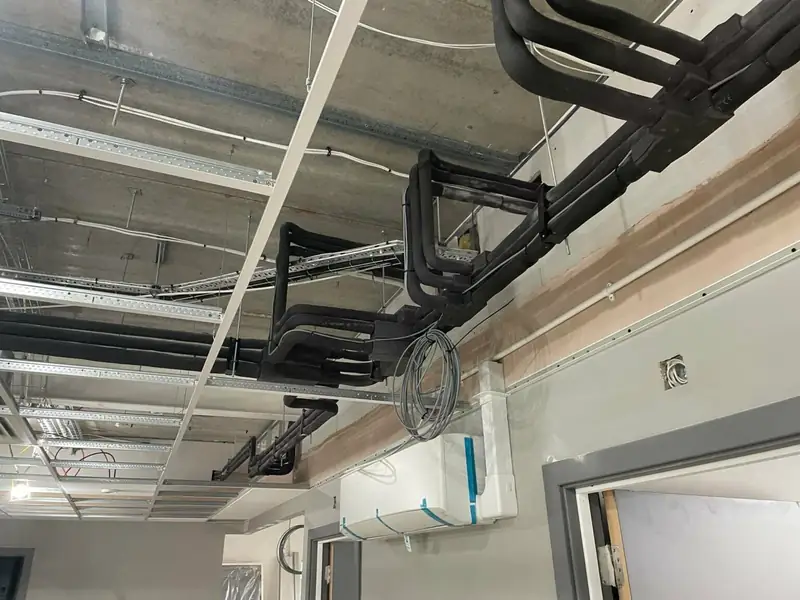
Units recessed into a suspended ceiling, or concealed above it with grilles, which suit offices, shops and open-plan commercial spaces. We cover these on our commercial air conditioning page.
How do we size an air conditioning unit for a room?
System capacity is measured in kilowatts (kW) or BTU. An undersized unit runs flat out and struggles on hot days; an oversized one cycles on and off, wastes energy and doesn’t remove humidity properly. As a rough guide, a typical bedroom often needs around 2.0–2.6kW of cooling and a larger living space 3.5kW or more, but we calculate it properly by looking at:
- Room size and ceiling height
- Which way the windows face, and how much glazing there is
- Insulation, roof lights and whether it’s a loft or extension
- How many people use the room and what equipment runs in it
Where can the indoor and outdoor units go?
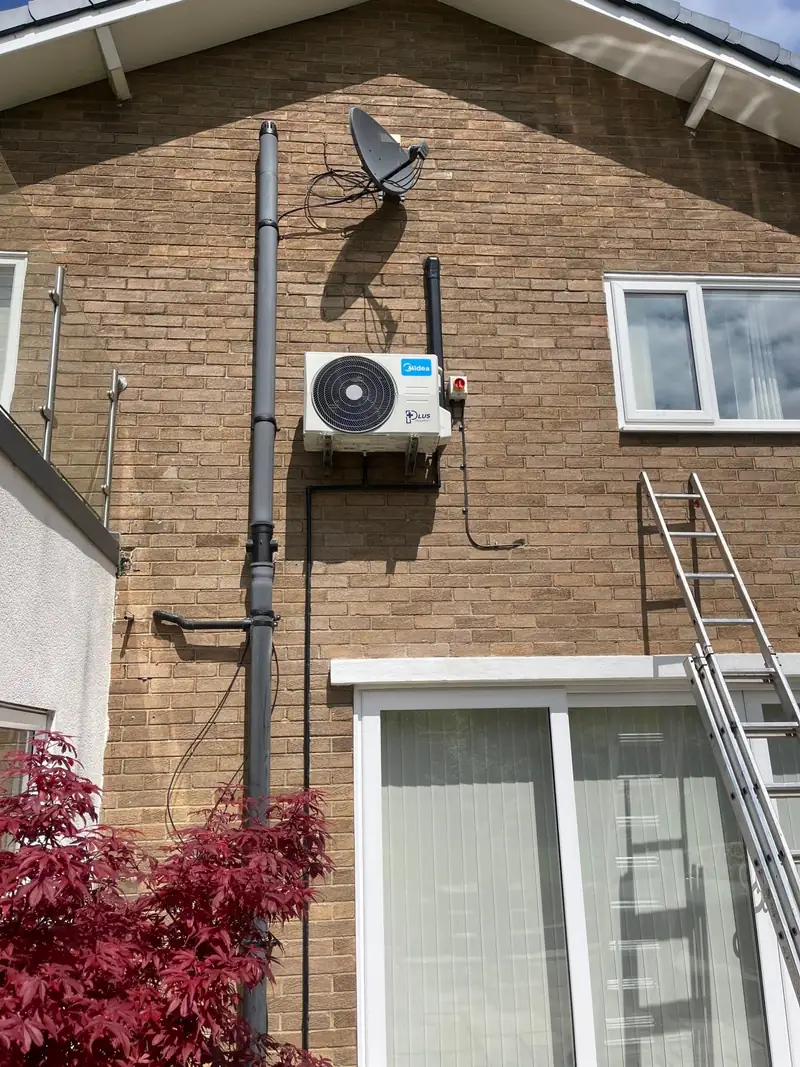
Indoor units are usually mounted high on an outside wall, with the pipework leaving through a single neat core-drilled hole. Outdoor units can go on wall brackets, on a level ground base or on a flat roof. We’ll look at airflow around the condenser, access for future servicing, how condensate water will drain (by gravity or with a small condensate pump) and how the unit will look from the street and your garden. Where pipework has to run along a wall, we finish it in trunking.
Planning tip: keep outdoor units away from neighbours’ bedroom windows where possible. Many home installations don’t need a planning application, but listed buildings, conservation areas and flats can have extra requirements. We’ll flag anything to check during the survey.
How much does air conditioning installation cost in Manchester?
Every quote we give is fixed and itemised after a survey, because the price depends on a handful of variables:
- The number of indoor units and the size of the outdoor unit
- The length and complexity of the pipe run between them
- Access: ground-floor brackets are simpler than high gable walls or flat roofs
- Whether a condensate pump, extra trunking or a new electrical supply is needed
- The brand and efficiency rating of the equipment you choose
Our surveys and quotes are free, so you can compare options without any commitment.
Aftercare: warranties and servicing
Manufacturer warranties normally require the system to be installed by a qualified engineer and serviced regularly. We’ll explain your warranty terms at handover and can book your first service with our air conditioning servicing team. If anything ever goes wrong, our repair service is on hand.
How an air conditioning installation works, step by step
Most single-room domestic installs are completed in a day. Larger multi-room and commercial projects are planned in stages.
Protect & prepare
Dust sheets down, unit positions marked and confirmed with you before any drilling starts.
Mount & connect
Units fixed securely, pipework and cabling run and finished neatly, and the condensate drain set to fall correctly.
Test & evacuate
The pipework is pressure tested for leaks, then evacuated to remove air and moisture before refrigerant is released.
Commission & hand over
We check temperatures and operation, tidy up, and show you the remote, timers, modes and filter cleaning.
Air conditioning installation FAQs
How long does it take to install air conditioning?
Most single-room home installations are completed in one day. Multi-room systems typically take one to three days, and commercial projects are scheduled around your business. We’ll confirm timescales in your quote.
Can I install air conditioning myself?
No. Connecting a split system involves handling refrigerant, which by law must be done by an F-Gas certified engineer. A DIY or uncertified install can also invalidate the manufacturer’s warranty.
Does air conditioning need its own electrical supply?
Smaller domestic units can often be connected from a suitable existing circuit, while larger systems usually need a dedicated supply. We’ll check this at survey and include it in the quote if it’s needed.
Will installing air conditioning damage my walls?
A typical wall-mounted unit needs one core-drilled hole through the wall for the pipework, which is sealed afterwards. We protect floors and furniture and leave the area clean.
Do you install air conditioning in new builds and extensions?
Yes. It’s often easiest to plan pipe routes during a build or renovation, so it’s worth getting in touch early if you’re extending or converting a loft.
Planning a project? These pages will help

Book your free installation survey
Tell us which rooms you’d like to cool or heat and we’ll arrange a survey and a fixed, itemised quote. No pressure, no obligation.